
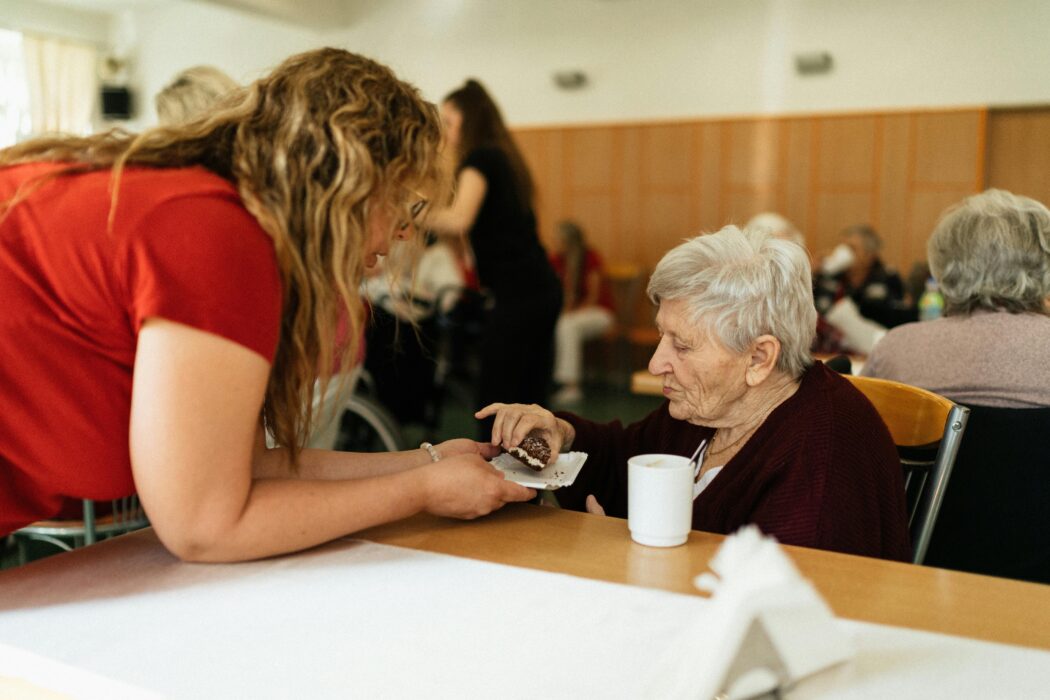
Finger Foods – Empowering Patients Through Accessible Nutrition
Imagine wanting to eat but feeling overwhelmed by the simple act of doing it. In our younger years, we move through life full of energy. Our days are filled with family responsibilities, work, and commitments, and we rarely stop to think about how much effort something as ordinary as eating requires. Meals feel automatic. We rarely pause to consider the coordination and focus that eating actually requires. But in long-term care homes, the reality can be very different. As Nutrition Managers, we see every day how aging and cognitive decline can transform the simple act of eating into a difficult and sometimes frustrating task. Residents living with dementia may struggle to hold utensils, recognize food on their plate, or concentrate long enough to finish a meal. What was once a natural daily activity becomes something that requires patience, assistance, and thoughtful planning.
When eating becomes difficult, the consequences go far beyond the dining table. Reduced food intake can quickly lead to weight loss, malnutrition, dehydration, and declining health. At the same time, mealtimes are often one of the few structured social moments in the day for residents living in long-term care facilities around the world. When these moments become stressful or discouraging, the resident’s quality of life may suffer as well.
For this reason, adapting meals to residents’ abilities is not simply a nutritional intervention—it is a matter of dignity. One strategy that has gained attention in long-term care settings worldwide is the use of finger foods, meals designed to be eaten easily with the hands instead of cutlery. While this concept may appear simple, finger foods can play an important role in restoring independence, improving food intake, and bringing enjoyment back to mealtimes for residents living with dementia.
Finger foods are meals that can be picked up and eaten easily without utensils. They are designed to hold their shape, be easy to grasp, and require minimal chewing. Examples may include small sandwiches, fruit pieces, vegetable sticks, mini muffins, soft protein patties, or bite-sized casseroles. These foods allow residents to eat independently even when motor coordination or cognitive ability makes the use of utensils difficult.
One of the most important benefits of finger foods is that they help preserve independence. As dementia progresses, many individuals experience difficulties coordinating movements or using utensils properly. This can lead to frustration, embarrassment, and dependence on caregivers during meals. Finger foods allow residents to feed themselves using their hands, reducing reliance on assistance and helping maintain a sense of autonomy. Maintaining this independence is extremely important, especially in institutional environments where many aspects of daily life are already structured by schedules and routines (Burbidge, 2013).
Finger foods can also help improve food intake among residents living with dementia. Cognitive impairments often affect concentration, memory, and the ability to recognize foods. Some residents may forget whether they have eaten, while others may become distracted during meals and stop eating prematurely. These challenges can significantly increase the risk of malnutrition. Research in nursing homes shows that residents ate slightly more on average when finger foods were offered, with intake scores rising from 39 to 40.7 out of 50. More importantly, nearly twice as many residents reached a healthy level of food intake when served finger foods compared with standard meals, meaning a higher number of residents met their nutritional needs (Carrette et al, 2023).
Beyond improving intake, finger foods also promote autonomy and choice. When residents need assistance to eat, caregivers often control the pace, portion, and timing of meals. Finger foods allow residents to decide what to eat, when to eat, and how much to eat, supporting person-centered care and reinforcing their sense of identity and independence. Research shows that residents with Alzheimer’s disease are still capable of making food choices when given appealing options. In one study, residents ate approximately 80% of the finger foods offered, and only 8% refused to taste them. Foods that were visually appealing, served with sauces, or presented in contrasting layers were chosen more frequently and consumed in greater quantities (Pouyet et al., 2014).
This is where creativity as Nutrition Managers becomes essential. A study conducted in Japan demonstrated that adding a sauce to finger foods significantly increased intake among residents with dementia, even when participants were not familiar with dipping foods in sauce. In one experiment, 90.5% of residents ate more chocolate-sauced finger food than the same food without sauce, as an example of the impact (Kimura et al., 2019). These findings highlight the power of low-level sensory factors—taste, texture, color, and visual contrast—in stimulating appetite and encouraging adequate food intake, sometimes even more than cognitive familiarity. By combining these insights with an understanding of residents’ cultural background and personal preferences, we can design menus that are not only safe and nutritionally balanced but also genuinely appealing.
However, implementing finger foods requires careful planning to ensure that meals remain nutritionally balanced and safe for residents. Foods must be soft enough to chew and swallow easily, particularly for residents who may experience swallowing difficulties. Removing hard textures, skins, or seeds can help reduce choking risk. Collaboration with dietitians is also essential to ensure that finger food menus still provide adequate protein, fiber, vitamins, and minerals.
Cost is another factor that Nutrition Managers must consider. Preparing finger food menus may require additional labor, ingredients, or preparation time. One study reported that finger food meals were approximately 49% more expensive than standard meals in a nursing home setting (Carrette et al., 2023). For this reason, some facilities choose to incorporate finger foods periodically rather than replacing the entire menu. Even occasional finger food meals can introduce variety while supporting residents who benefit most from this approach.
In my opinion, finger foods are more than just a menu modification—they are a powerful way to honor the abilities and dignity of residents. By tailoring meals to individual needs, Nutrition Managers can help restore independence, support adequate food intake, and enhance the overall mealtime experience. Finger foods demonstrate that the simplest solutions can often be the most effective. When we design meals that respect residents’ abilities and preferences, we are not only meeting their nutritional needs—we are safeguarding their dignity and improving their quality of life.